
How to Train Your Dog Using Human Psychology
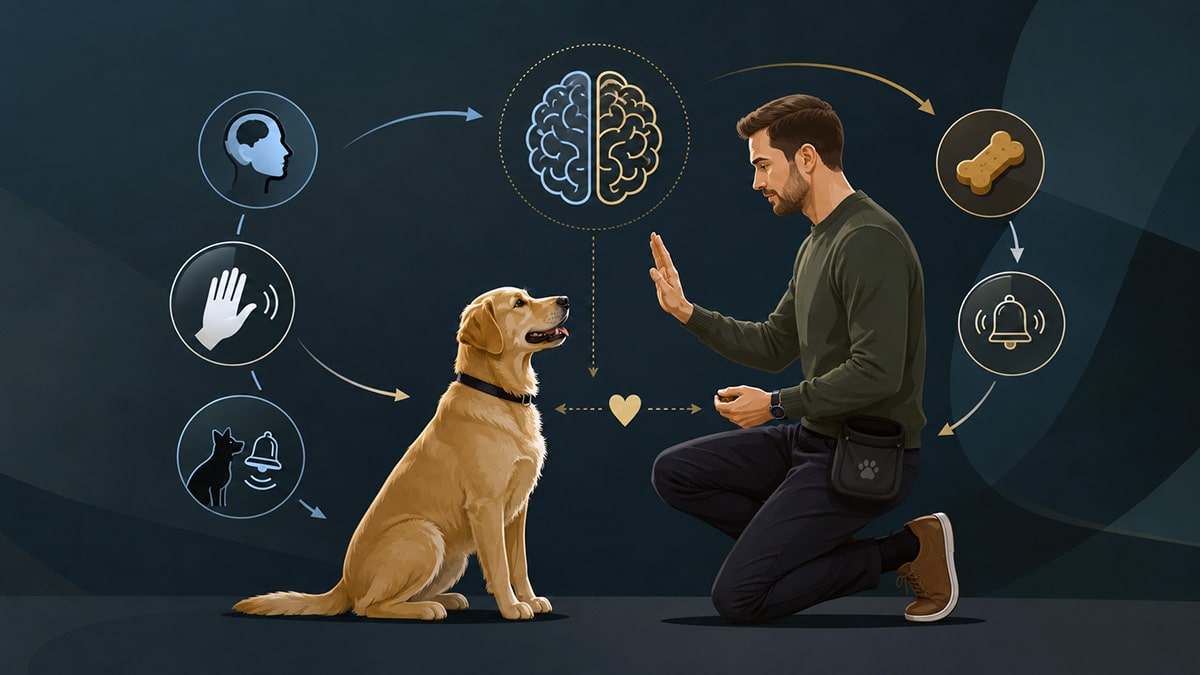
Many of the psychological principles used to understand human behaviour also help explain how dogs learn. Rewards, repetition, associations, attention and non-verbal signals can all be used to encourage desirable behaviour.
The following dog-training methods turn those principles into practical experiments you can try at home. Each one teaches your dog a tangible behaviour while also showing how the same psychological idea can influence human interactions.
Seven Psychology-Based Dog Training Methods
Psychological principles can help you teach desirable behaviour without confusing or overwhelming your dog. Consistency, achievable goals and well-timed rewards are more effective than expecting immediate obedience.
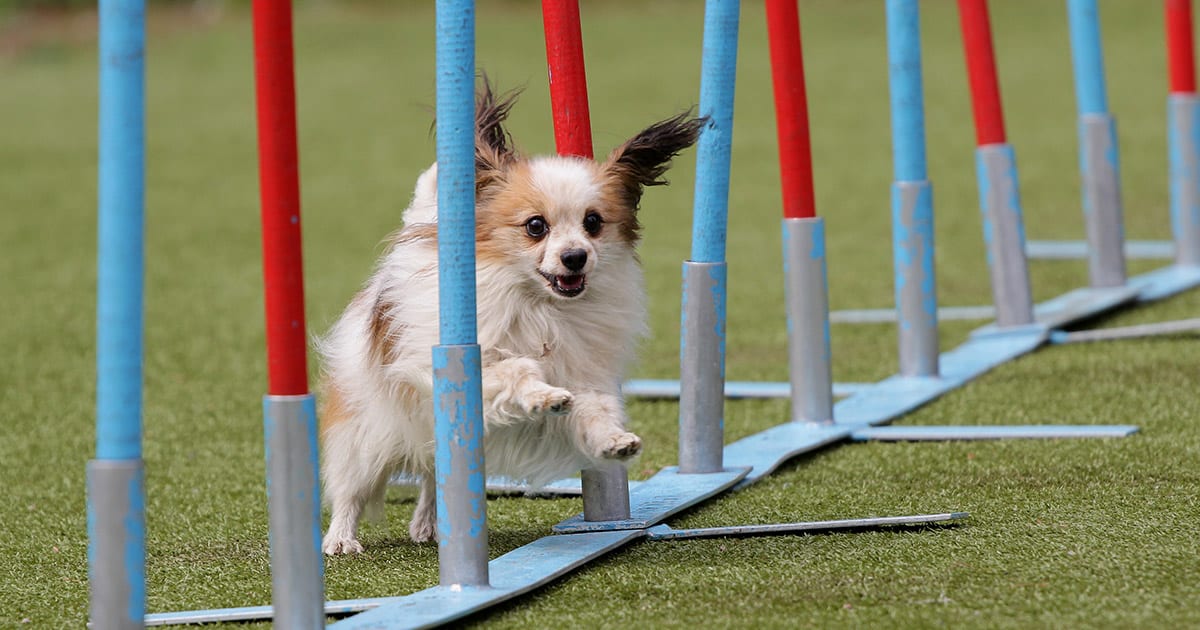
Several examples involve my experience training Cassie, a Papillon I have owned since she was a puppy. Cassie is now 16 and can still run like the wind, although she has mostly lost her hearing. Hand gestures and other non-verbal signals allow her to remain responsive and well behaved.
1. Train with realistic goals
Set achievable targets that match your dog’s current learning ability. Gradual progress prevents frustration and maintains an appropriate level of challenge.
What to do: Place a mat nearby and reward your dog for looking at it, stepping towards it, putting its paws on it and finally standing or lying on it. Add the command “mat” once the dog reliably moves onto it.
Expected result: After several short sessions, your dog should go to the mat when asked and remain there briefly.
Human implication: For people of all ages, large goals become easier when each small improvement is recognised rather than waiting for perfect performance.
Dogs perceive and interact with their surroundings differently from humans. Breaking training into manageable steps makes each lesson easier for the dog to understand and enjoy.
With Cassie, I began with basic commands before gradually introducing more complex tasks. The steady progression helped her develop confidence and new skills.
2. Remove rewards for unwanted behaviour
Removing something desirable after unwanted behaviour is known in psychology as negative punishment. The term does not mean physical punishment; it refers to briefly withholding attention, play or another reward so the behaviour is less likely to be repeated.
What to do: Approach your dog but stop and turn away whenever it jumps. Resume your approach and provide attention only when all four paws remain on the floor or the dog sits.
Expected result: The dog should begin standing calmly or sitting when someone approaches because jumping makes attention disappear.
Human implication: Withdrawing attention from disruptive behaviour can be effective in managing children. It is an alternative to potentially rewarding disruption with argument, laughter or repeated warnings.
Giving attention to a dog that jumps can unintentionally reward the jumping. Wait until the dog has settled before offering attention to teach that calm behaviour produces a better outcome.
When Cassie barked excessively for attention, I avoided responding until she became quiet. Rewarding the calmer behaviour helped her learn that barking did not produce the desired result.
3. Use classical conditioning
Classical conditioning creates an association between a particular signal and an expected event. The concept is closely associated with Ivan Pavlov, whose experiments showed that dogs could learn to respond to a sound repeatedly paired with food.
What to do: Ring the same bell once immediately before placing each meal in the feeding area. After several days, ring the bell while your dog is elsewhere in the house.
Expected result: The dog should respond to the bell by becoming alert and moving towards the usual feeding place.
Human implication: Repeated signals create expectations, which is why familiar sounds, routines and tones of voice can influence human reactions before anything is said directly.
A bell might also be paired with outdoor bathroom breaks until the dog associates the sound with going outside. In Cassie’s training, a particular sound became a signal for mealtime, and she soon anticipated being fed whenever she heard it.
Classical conditioning involves repeatedly pairing a previously neutral signal with something that naturally produces a response. Eventually, the learned signal can produce an automatic reaction on its own.
4. Reward basic behaviours
Acknowledge desirable everyday behaviour rather than waiting for an impressive trick. Consistent reinforcement helps establish good habits and basic obedience.
What to do: Keep treats nearby and quietly reward your dog whenever it voluntarily lies down beside you. Add the word “settle” as the dog lowers itself, then gradually reward longer periods of calm lying.
Expected result: The dog should begin lying quietly when given the “settle” command, even when mild activity is occurring nearby.
Human implication: Noticing desirable behaviour as it happens can build good habits more effectively than responding only when something goes wrong.
Food, affection and play can all serve as rewards. Choose something your dog values and provide it immediately after the desired behaviour so the connection is clear.
When Cassie followed a command correctly, I immediately rewarded her with a treat or affection. Prompt reinforcement made it easier for her to connect the reward with the behaviour.
You can also reward a dog for voluntarily sitting, remaining calm or approaching when called. Offer affection after the desired action to strengthen the association between good behaviour and a positive outcome.
5. Combine treats with praise
Combining treats with verbal praise provides more than one form of positive reinforcement. A varied reward system keeps training engaging while strengthening the bond between you and your dog.
What to do: From a short distance, say your dog’s name followed by “come.” Reward the dog immediately with both enthusiastic praise and a treat when it reaches you. Practise indoors before increasing the distance.
Expected result: The dog should begin returning promptly because the command predicts food, praise and positive contact with you.
Human implication: Tangible rewards can establish a behaviour, while praise and positive relationships help sustain motivation over time.
Treats provide an immediate physical reward, while praise and affection provide social reinforcement. With Cassie, alternating between a treat and an enthusiastic “Good job!” kept her interested and taught her to value different kinds of rewards.
6. Reduce rewards gradually
Frequent rewards are useful when teaching a new behaviour, but they should become less predictable once the behaviour is established. Gradually reducing treats helps prevent dependence on food while preserving motivation.
What to do: Reward every successful sit at first. Once the response is reliable, provide treats after every second or third sit while continuing to praise each correct response.
Expected result: The dog should continue sitting on command even when food is not offered every time.
Human implication: Frequent rewards help establish a new habit, but gradually reducing them encourages behaviour that does not depend on constant payment or prizes.
Giving food or attention indiscriminately can encourage begging and demanding behaviour. Rewards work best when they clearly follow a command, a new skill or a noticeable improvement.
Once Cassie understood a behaviour, I rewarded it intermittently rather than every time. Less predictable rewards kept the behaviour strong while making each treat more meaningful.
7. Use non-verbal signals
Gestures and body language can communicate commands clearly, especially when a dog responds well to visual cues. Hand signals also provide an alternative when hearing declines.
What to do: Give the usual spoken command while raising your open palm in the same way each time. After repeated practice, use the hand gesture without saying “sit.”
Expected result: The dog should sit in response to the gesture alone, as Cassie learned to do after losing much of her hearing.
Human implication: Gestures, posture and facial expressions can reinforce spoken communication or send a conflicting message.
As Cassie’s hearing deteriorated, visual signals became an essential part of our communication. Familiar gestures allowed her to continue responding to commands even when she could no longer hear them reliably.
Successful dog training depends on adapting each technique to the animal’s temperament, abilities and learning style. An understanding of behavioural psychology helps make the process clearer, more humane and more enjoyable for both dog and owner.
